
Romeny's Ankle, Rizky's Numbers and Herdman's Unannounced List: Indonesia's November Puzzle
मुख्य सारांश: इंडोनेशिया के मुख्य कोच जॉन हर्डमैन ने 9-17 नवंबर 2026 की FIFA मैचडे विंडो के लिए आधिकारिक स्क्वाड की घोषणा अभी नहीं की है। मीडिया में चार खिलाड़ियों के बाहर होने की जो खबरें चल रही हैं, वे अटकल हैं; शीर्षक चार नाम बताता है, पाठ तीन कहता है और नाम सिर्फ दो आते हैं। ओले रोमेनी क्यों चर्चा में हैं? उन्होंने 25 अक्टूबर को क्लब मैच खेला और 28 अक्टूबर को बताया कि टखने की चोट बदतर हो गई है। 72 घंटे के भीतर दोबारा बढ़ना पुरानी चोट की पुनरावृत्ति का संकेत है। चूंकि चोट क्लब मैच में लगी, FIFA का क्लब प्रोटेक्शन प्रोग्राम लागू नहीं होता। सबसे संभावित परिणाम: मेडिकल आधार पर बाहर। रिज़्की एका प्रतामा का मामला क्या है? 2026-27 घरेलू लीग में छह मैच, एक असिस्ट, शून्य गोल। उनका पिछला कैप एक बीमार खिलाड़ी के रिप्लेसमेंट के तौर पर आया था, यानी परिस्थितिजन्य। छह मैच का सैंपल निर्णायक नहीं है और खेले गए मिनट नहीं बताए गए। कोच की नीति क्या दिखती है? मौजूदा साक्ष्य को पुराने योगदान पर प्राथमिकता; पिछली बार का बुलावा अगली बार की जगह की गारंटी नहीं। बड़ा संरचनात्मक मुद्दा क्या है? इंडोनेशिया की टीम यूरोप-आधारित/प्राकृतिक खिलाड़ियों और घरेलू लीग खिलाड़ियों को अलग मानकों पर आंकती है। टीम की ऊपरी सीमा विदेशी क्लबों द्वारा नियंत्रित खिलाड़ियों की उपलब्धता पर टिकी है। क्या कोई नियम उल्लंघन है? नहीं। यह सामान्य स्क्वाड-प्रबंधन का मामला है। अस्वीकरण: क्लब संबद्धता, कोच की पहचान, प्रतियोगिता के नाम और सांख्यिकीय आंकड़े मूल स्रोत के अनुसार हैं और स्वतंत्र रूप से सत्यापित नहीं किए गए हैं। यह जानकारी केवल खेल-संदर्भ के लिए है, सट्टेबाजी सलाह नहीं।
JAKARTA — Indonesia's national football team is preparing for the FIFA matchday window running from 9 to 17 November. The team management has explicitly framed this window as a phase of preparation for the 2027 Asian Cup: not a competitive qualifier, but a working window. Yet the debate that has dominated Indonesian football media over the past few days has been about a list rather than about the pitch — specifically, which players head coach John Herdman will leave out. Two names sit at the centre of it: striker Ole Romeny and domestic-league attacker Rizky Eka Pratama.
The first thing that needs stating clearly is a basic fact. Herdman has not yet announced an official squad. Much of what has been published in recent days is prediction, not reporting. The article that started the debate carried a headline claiming four players would be dropped, told readers inside the body that three were at risk, and ultimately produced only two names. That internal contradiction is itself an indicator of how solid the list construction is. The debate should therefore be read as speculation, and only the verifiable material inside it should be retained.
Romeny: a 72-hour timeline
The Romeny case is the most concrete part of the story, because it rests on the player's own statement. He played for his club on Sunday, 25 October. On Wednesday, 28 October, he stated publicly that his ankle problem had worsened relative to the initial assessment. That three-day gap is itself a signal. An aggravation immediately after a competitive return is usually not a fresh injury but the consequence of a premature return or of playing under managed load. In other words, this looks like a recurrence, not a new event.
The implication is that Romeny's unavailability is a problem shared between club and national-team medical staff. The Dutch-league striker supplies a vertical, higher-tempo forward option that a domestic-league alternative generally does not. Against compact Asian or ASEAN opponents that profile has real value. His absence is therefore not the loss of a squad slot but the loss of a specific tactical option.
There is a colder logic at work too. A preparation window is always worth less than a competitive fixture, so the risk-reward calculation is asymmetric for the coach. Call Romeny and the ankle worsens during the window, and a club-federation dispute over medical liability becomes possible. Omit him pre-emptively and the downside is contained. The most probable outcome is therefore a medically framed omission, not a selection-based one.
It is worth noting that FIFA release rules oblige a club to release an available player, but a player with a declared injury turns the matter into a shared decision. A social-media statement is not a formal medical channel, so the governing inputs will be the club's medical file and the federation's independent assessment. And because the injury arose in a club fixture, FIFA's Club Protection Programme does not apply here. The cost sits with the club, which is precisely why the club will be cautious.
Rizky: six matches, a large conclusion
The second name is Rizky Eka Pratama, and his case runs almost in the opposite direction. There is no injury here; the evidence is a statistical line. In the 2026-27 domestic league season he has six appearances, one assist and no goals. For an attacking player at a traditional power such as PSM Makassar, competing for a national-team place, that is a thin return.
But a nuance gets lost. Six appearances is a very small sample, and the available information does not say how many minutes those appearances contained. A player with six starts and a player with six substitute cameos totalling 120 minutes are not the same case. The data on hand is not sufficient to separate poor form from a lack of opportunity. That said, the direction of the argument is not baseless — weak output is genuinely unhelpful when a squad place is at stake.
One further fact is decisive in Rizky's case. His cap came at the ASEAN-level tournament Indonesia won, and it came as a replacement for an ill player. That call-up was circumstantial, not merit-based. Against that background, falling out of the squad after six goalless league games is not a fall from grace but a return to baseline. It sounds harsh, but it is the most defensible conclusion the numbers support.
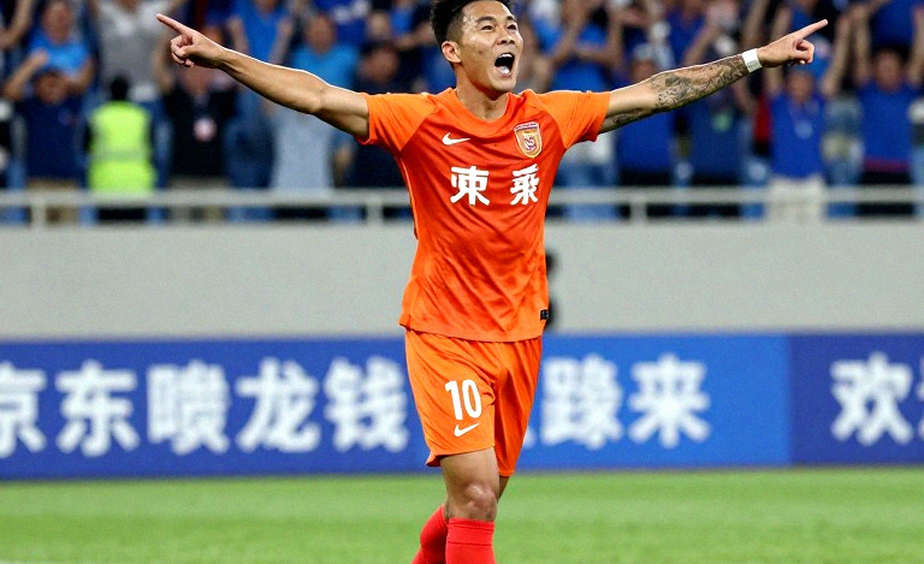
The media's role deserves scrutiny here too. Publishing a six-match stat line as a public rationale for selection imposes a cost on the player that is larger than the shortfall the numbers describe. The label it produces outlasts the sample and cannot be fully erased by a later call-up.
Herdman's doctrine: current evidence over past credit
Read together, the two names point to a selection doctrine. In both cases the decision turns on present-tense evidence — a current injury in one, current output in the other. Past contribution carries little weight. That is why the argument has surfaced that a previous call-up guarantees nothing for the next one. The coach's approach is evidence-driven, not sentimental.
That approach is rational for a team that has just won a title. A regional championship resets expectations upward and removes the underdog protection. In that phase, routine rotation reads as punishment. The definition of the November window makes this harder still: it is preparation, so experimentation and rotation are legitimate, but media and supporters read it as a competitive examination.
There is also a dressing-room fracture that receives too little attention. Players developed in Europe and players from the domestic league arrive with different evidence bases, different media profiles and different wage expectations. Rizky is the emblem of the domestic cohort. Managing that group's belief in fair access is the coach's real administrative task, and public discussion of it is close to zero.
A two-speed talent structure
The deeper issue is not selection but evaluation asymmetry. Indonesia now recruits along two paths: Europe-born or Europe-developed players eligible through naturalisation or ancestry, and players produced by Liga 1. The two are judged on incompatible evidence. The European-based player is assessed on profile and ceiling; the domestic player is assessed on goals and assists. That is rational but harsh, and it systematically disadvantages domestic-league forwards.
Romeny embodies this. He offers a profile the domestic league cannot produce, which is exactly his value. But that value also creates dependence. The team's ceiling is set by the availability of players it does not control. Their medical management sits with a foreign club that has no stake in a November window. This is a direct import of risk: European club-calendar risk landing inside an ASEAN window.
Within the same structure, the naturalisation programme functions as a sunk investment. Legal process, integration and administrative cost are recovered in competitive minutes. A key naturalised player missing windows repeatedly is not a loss but a delayed return. If it becomes a pattern, the programme's cost-effectiveness will be debated again.
Headline versus body
The weakest link in the whole discussion is the quality of the information itself. The available material contains roughly twenty information points, more than half of them explicitly tagged as opinion or inference. There are only two primary sources: Romeny's own statement and Rizky's statistical line. The headline claims four names, the body says three, and two are named. That suggests the number may have been inflated for headline optimisation, and that the two unnamed players were a production artefact rather than verified reporting.
The practical consequence is that material of this kind should be read as zero-evidence until the squad is announced. Anyone citing it downstream should record only two things: Romeny's injury and Rizky's stat line. The four-player list is an error that should not be propagated.
Where the risk lies
Sportingly, the biggest risk is not Romeny missing one window but his ankle becoming a long-term problem. A recurring ankle issue is the least forgiving category for a striker, and an aggravation inside 72 hours of return is a warning sign rather than a routine event.
The second risk is reputational. Publicly presenting a domestic-league player's six-match line as a selection rationale can permanently label him. The third is the medical-authority boundary between club and country: a future dispute is possible if an injured player is called up. The fourth is expectation inflation — after a title, every rotation can be framed as a crisis.
Notably, nothing in the story indicates any rule violation. No dispute, no financial breach, no eligibility question. This is routine squad management presented as something abnormal. The largest risk to the reader is therefore credence risk, not football risk.
What to watch
The first and most direct signal is the official squad list. Its release will either end the debate or confirm it. The revealing detail will be how Romeny's absence is framed — medically or on selection grounds. That will clarify the federation's communication strategy for the Asian Cup cycle.
The second signal is Romeny's recovery. Two consecutive full club matches without a setback would end the availability crisis. If that does not happen, Asian Cup planning should be built on the assumption that he is not the primary reference forward.
The third is Rizky's minutes and output in the domestic league. A rise in minutes with goal contributions across eight to ten matches would keep the domestic pathway credible. A continued freeze-out would make it hard to argue the route is genuinely open.
The fourth is the balance of Herdman's selections — the ratio of overseas and naturalised call-ups to domestic-league call-ups in each window. A sustained skew would increase pressure on both integration and pathway perception. The fifth is the collision between the domestic league calendar and FIFA windows; if league fixtures run through the window, domestic availability falls and the overseas bias widens.
Conclusion
Two names, two different stories, one shared outcome. Romeny's case is about management: an injury that may have been aggravated by a premature return, and a coach who will not take risks in a preparation window. Rizky's case is about evaluation: a player paying the price of a small sample and a large number, when his original call-up was itself an accident of circumstance. What connects them is a single truth. Indonesia's ceiling is currently set by the availability of players who operate on foreign clubs' calendars, and its floor by the numbers produced by players the domestic league supplies. Closing that gap is a structural task, not a selection one. Until the squad list appears, the most sensible public stance is to treat speculation as speculation.