
The New Architecture of Asian Cricket: How Leagues, Politics and Format Are Shaping the Game's Future
एशियाई क्रिकेट की संरचना चार स्तरों में बंटी है—भारत अलग श्रेणी में, पाकिस्तान-श्रीलंका-बांग्लादेश अस्थिर मध्य स्तर में, अफगानिस्तान सबसे तेज़ बढ़ता देश, और नेपाल व सहयोगी देश चौथे स्तर पर। खेल का आर्थिक केंद्र भारतीय बाजार है: IPL के 2023-27 प्रसारण अधिकार लगभग 48 हज़ार करोड़ रुपये में बिके, और ICC राजस्व में सबसे बड़ा हिस्सा BCCI का है। 2012-13 के बाद भारत-पाकिस्तान द्विपक्षीय श्रृंखला नहीं हुई; अब दोनों केवल बहुपक्षीय टूर्नामेंट में मिलते हैं, और 2023 एशिया कप तथा 2025 चैंपियंस ट्रॉफी 'हाइब्रिड मॉडल' पर चले। सबसे बड़ा शासन-विवाद NOC और लीग बनाम राष्ट्रीय टीम का टकराव है। 2028 लॉस एंजिल्स ओलंपिक में क्रिकेट के टी20 प्रारूप में शामिल होने से कैलेंडर, क्वालीफिकेशन और अमेरिकी बाजार—तीनों पर असर पड़ेगा। ध्यान दें: कोई भी नीलामी कीमत खेल-मूल्य का प्रमाण नहीं है, और लीग प्रदर्शन से अंतरराष्ट्रीय क्षमता का अनुमान लगाना पद्धतिगत भूल है।
This analytical feature is not a report on any single match, series or recent result. It is an analysis of the structural framework of Asian cricket, based on publicly verifiable facts and long-term trends.
Introduction: A Continent That Is the Economic Centre of the Game
The geography of global cricket is odd. The sport was born in England, its first professional structure was built by Australia and England, and yet today its economic centre of gravity lies in Asia. The largest share of the International Cricket Council's (ICC) revenue flows to the Board of Control for Cricket in India (BCCI); the largest audience base is in South Asia; and the most expensive franchise league in the world operates here too. That is why understanding Asian cricket today is bigger than understanding any one team—it is understanding the economic and political architecture of the whole sport.
The Asian Cricket Council (ACC) has five full members—India, Pakistan, Sri Lanka, Bangladesh and Afghanistan—alongside more than two dozen associate members, including Nepal, the United Arab Emirates, Oman, Hong Kong, Malaysia, Singapore and Qatar. Between these nations, the standard of play, the resources, the market and the political relationships are entirely different. That inequality is simultaneously Asian cricket's greatest strength and its greatest weakness.
This feature opens up eight dimensions of the game—format, player technique and data, the team landscape, the league and commercial ecosystem, rules and governance, risk, public narrative and industry transmission—in the Asian context. The aim is not to predict any single outcome, but to show how this framework operates and where it comes under pressure.
The Asia Cup and the ACC: The Foundation of the Regional Structure
The Asia Cup has been played since 2026 and is the ACC's flagship tournament. Its most interesting feature is format rotation. It has alternated between ODI and T20—played in T20 format in 2026, ODI in 2026, T20 in the UAE in 2026, and ODI in 2026 under the joint hosting of Pakistan and Sri Lanka. That rotation is itself a signal of Asian cricket's priorities: whichever format the ICC World Cup takes in a given year, the Asia Cup leans in that direction so that teams get a preparatory platform.
The 2026 edition is a historic precedent. The hosting rights originally belonged to Pakistan, but India refused to play there. The solution emerged as the 'hybrid model'—some matches in Pakistan, the rest in Sri Lanka, and all of India's matches on neutral soil. That model later became a template, repeated at the 2026 Champions Trophy. In Asian cricket today, the first question in any event-planning discussion is: where will India play? That is less a sporting question than a diplomatic one, and it is the central complexity of the ACC's work.
On the field, the Asia Cup matters too. It is a tournament with few participants, so every match carries extra weight, and the India–Pakistan fixture remains its central attraction. Technically, though, the tournament's real utility is for the emerging sides—for Afghanistan and Bangladesh it is a rare opportunity to play under genuine pressure, something bilateral series do not provide.
The Expansion of Franchise Leagues: From One Centre to Many
The biggest structural event in Asian cricket has occurred over the past decade and a half—the explosion of franchise leagues. The Indian Premier League (IPL) began in 2026 and has run with ten teams since 2026. Its broadcast rights for the 2026–27 cycle sold for roughly ₹48,000 crore—a figure that alone proves the Indian domestic market is the engine of the global cricket economy.
The Pakistan Super League (PSL) began in 2026 and runs with six teams. Its development path ran from being played entirely abroad for security reasons to a gradual full return to Pakistan—finals in Karachi and Lahore were a major signal in that direction. The Bangladesh Premier League (BPL) has run since 2026, though instability in franchise ownership and financial sustainability have been its persistent challenge. Sri Lanka's Lanka Premier League (LPL) began in 2026 and runs with five teams; its economic base is narrow and it survives mainly on the participation of Indian and Pakistani players.
Beyond these, the UAE's International League T20 (ILT20) has run since 2026, Afghanistan hosts the Shpageeza Cricket League, and Nepal launched its first franchise league, the Nepal Premier League, in 2026.
This expansion has three consequences. First, the division of the calendar—from January to May, the leagues of South Africa, the UAE, Bangladesh and Pakistan collide, and players must choose. Second, a change in salary structure—league money is now a larger income source than central contracts for players in several countries. Third, and most importantly, cross-border franchise ownership: owners of the Indian league bought teams in leagues in South Africa, the UAE and the United States, creating a network in which a player's price is set less by performance than by market value.
The Talent Supply Chain and Player Mobility
Asian cricket's real strength is its talent pipeline. India's domestic structure—Ranji Trophy, Duleep Trophy, Vijay Hazare Trophy and now the Women's Premier League—is so vast that dozens of players emerge each year who cannot find a place in the national side. In Pakistan, the Quaid-e-Azam Trophy and the domestic T20 tournament play the same role. Sri Lanka and Bangladesh have smaller structures, but league and domestic cricket together maintain a continuous supply. Afghanistan's case is the most unusual—there is no secure domestic structure at home, so talent development has happened in large part through neighbouring leagues and through cricket in refugee camps.
But the question of control over that supply is the most contentious. A national board has essentially one tool to block a player's participation in a foreign league—the No Objection Certificate (NOC). The principle is that a player's first duty is to the national team and that workload management is essential. In practice, the tool often becomes a board's bargaining power. The Indian board long maintained a policy of keeping its players away from foreign leagues, Pakistan has at times been strict about issuing NOCs, and in Bangladesh the conflict between central contracts and league participation has surfaced openly.
The direct effect falls on the player. For a player with a central contract, league money is a bonus; for one without—as with many Afghan, Nepali or Sri Lankan players—a league contract is the primary livelihood. This inequality is slowly changing the definition of loyalty to the national team, and it will be the source of the biggest governance disputes of the coming decade.
The Format Gap and the Misuse of Data
The most common error in cricket analysis is to treat the formats as one. Test, ODI and T20 are three different sports—the rules, the strategy and the basis on which a player is judged all differ. In Tests a batter's value is set by average; in T20 by strike rate; in ODIs a blend of both is decisive. The same applies to bowling—economy matters little in Tests and is life-or-death in T20.
In the Asian context this error takes two forms most often.
First, inferring international capability from league data. A batter's 150-plus strike rate in the IPL or BPL does not establish that he can handle the quality and pressure of international bowling. League bowling depth is limited, wickets are favourable, and the travel burden is lighter. Conversion rates have historically been modest, so treating league highlights as proof of international capability is a methodological mistake.
Second, and more dangerous, treating an auction price as proof of sporting value. A bid of ₹20 crore for a player does not establish how good he is at Test cricket. An auction price is set by three things: the scarcity of available players, the team's immediate need, and the marketing pressure to retain a local star. None of these is directly tied to on-field performance. Any auction analysis must therefore separate how much of the price is a 'scarce-position premium' (left-arm pace, wicketkeeper-batter, wrist spin), how much is a 'local young star premium', and how much is genuine sporting value.
Third, sample size. Asian cricket has a strong tradition of declaring an 'emerging star' on the basis of one or two innings. Establishing a player's trend requires at least a full season, performance across varied conditions, and a separation of home and away data. Without that, any claim of 'rising' or 'declining' is invalid.
The India–Pakistan Stalemate and the Hybrid Model
The biggest structural fissure in Asian cricket lies between India and Pakistan. No bilateral series has been played between the two since 2026–13. The two teams now meet only in ICC or ACC multilateral tournaments.
At the sporting level, the effect is that the most-watched fixture in the world has become the least-played. At the political level, the effect is that every multilateral tournament's hosting format is now built around this one question.
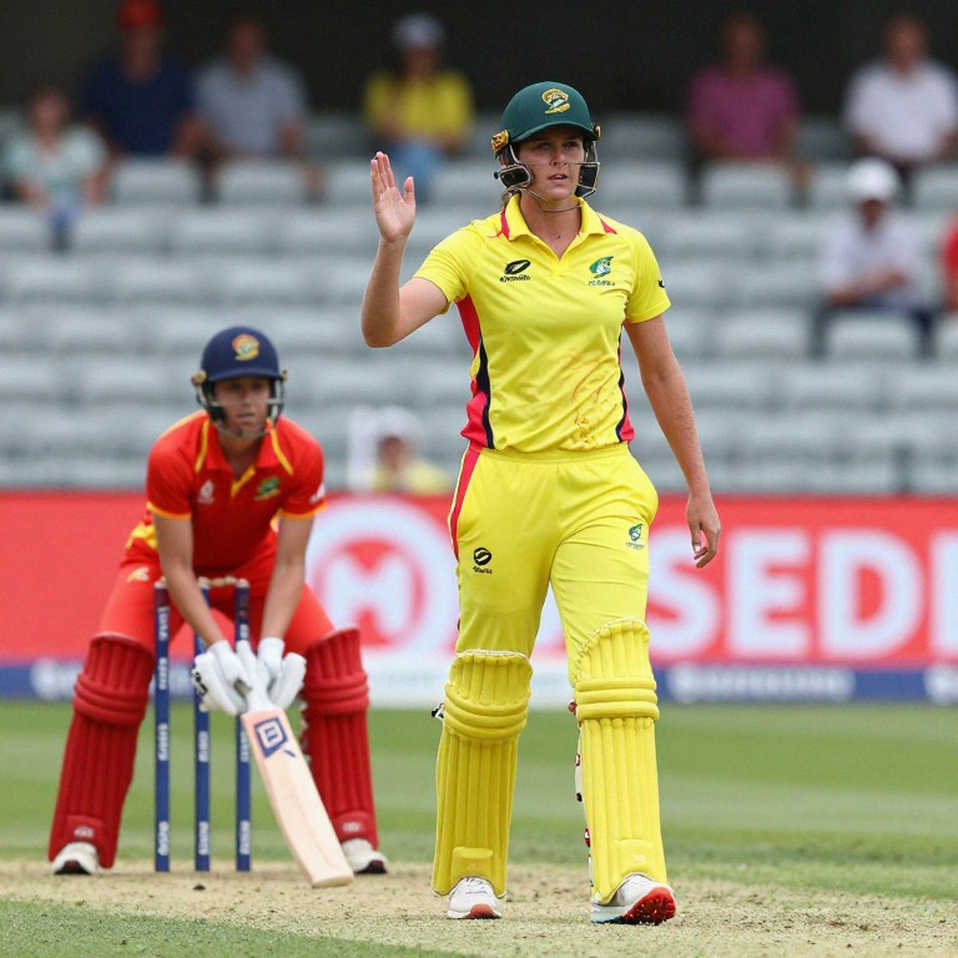
Both the 2026 Asia Cup and the 2026 Champions Trophy ran on the 'hybrid model' as a resolution to this tension—some matches in the host country, India's matches at a neutral venue. At the 2026 Champions Trophy, India played all its matches in Dubai and won the title. Sporting debate followed about whether playing at a single venue confers an unfair advantage—though that argument is met by the fact that the same venue was available to every team. The debate signals a permanent feature of Asian cricket: the definition of 'venue fairness' at major events is now contested.
A less-discussed aspect of the stalemate is commercial loss. The absence of an India–Pakistan bilateral series means both boards forgo a large share of broadcast and ticket revenue. For the Pakistan Cricket Board this is especially heavy, since its economic base depends on access to the Indian market—and that access is closed. That is why whenever an India–Pakistan match is staged at a neutral venue, its commercial value is many times that of an ordinary match.
Classifying the Teams: Not One Tier, but Four
Treating Asian cricket as a single unit is a mistake. It is better seen in four tiers.
Tier one—India. This tier is a category of its own. India has the world's deepest player pool, its largest market and the greatest influence over the ICC. Its problem is not talent but selection—with so many options, choosing the right combination becomes difficult, and the pressure of expectation rises disproportionately with every failure.
Tier two—Pakistan, Sri Lanka, Bangladesh. All three have talent but not consistency. Pakistan's fast-bowling heritage is among the richest in the world, but volatility in batting and selection policy is permanent. Sri Lanka has built a young side after a major transition and is strong in home conditions, but lacks depth in pace bowling. Bangladesh's home record runs far ahead of its away record—a gap so wide that any assessment of the team's level is incomplete without separating home from away.
Tier three—Afghanistan. This is the fastest progress of the past decade. Beating England, Pakistan and Sri Lanka at the 2026 ODI World Cup and reaching the semi-final of the 2026 T20 World Cup is not coincidence. The basis is clear: one of the best spin attacks in the world, and a marked improvement in pace bowling that has stopped the team from being confined to Asian conditions.
Tier four—Nepal and the associates. Nepal gained ODI status in 2026 and played the 2026 T20 World Cup. Oman, the UAE and Hong Kong are competitive at qualifier level. All of them face the same structural problem—a lack of finance and a lack of big matches.
Governance and Revenue Distribution
The ICC's revenue-distribution system has been the most contested subject of the past decade. In 2026 an attempt was made to carve out a special share for the 'Big Three' (BCCI, ECB, CA), which was later revised, but the substance remained that distribution among members is unequal and the largest share sits with the Indian market. In 2026 Jay Shah became ICC Chair—he had previously been ACC President. That sequence is a clear signal of Asian cricket's growing administrative power.
The ICC has one clear red line: government interference in member-board governance. Sri Lanka Cricket's suspension in 2026 was on this basis and was restored in January 2026. The example shows that political instability in Asian boards directly affects the sport's structure.
There is another dimension—the split of television and digital rights. In South Asia, a mobile-first viewing culture has made digital rights as valuable as, or more valuable than, television. This has changed boards' income structures, and has also raised the question of whether watching the game is becoming expensive for the domestic fan.
Layers of Risk
Every analysis needs a separate risk assessment. The main risks in Asian cricket are these.
Calendar load and injury. The collision between league and international cricket falls on players' bodies. Fast bowlers are especially at risk—a string of franchise tournaments followed by an international series is an unstable combination from a workload standpoint. If NOC and workload management are not integrated with league interests, the number of major injuries will rise.
Corruption and betting surveillance. The ICC Anti-Corruption Unit's (ACU) biggest challenge is new and lightly regulated tournaments. The combination of low-paid players, new organisers and the expansion of online betting raises risk. No firm claim can be made here without firm incident evidence—alleging corruption on inference is damaging in both directions.
Political and security risk. The India–Pakistan stalemate, questions over hosting in Afghanistan, political instability in Bangladesh—all of these directly affect the cricket calendar. It must be stated clearly that analysis of a sporting contest should be kept separate from the political situation, even though in real life the two are connected.
The expectation gap. Asian cricket's sharpest risk is cultural. In India and Pakistan every major tournament is held to matter more than winning or losing, and after every defeat there are personal accusations rather than structural reform. Selection then runs on fear, the appetite for risk falls, and the pressure on young players rises unnaturally.
Market, Broadcast and the 2028 Olympics
Industrially, Asian cricket's transmission path works in three stages. First, youth development and the domestic structure supply talent. Second, franchise leagues and national teams, where talent is evaluated and brands are built. Third, broadcast, advertising, merchandising and derivative markets, where the sport becomes a media product.
The most interesting new link in this chain is cricket's entry into the Olympics. Cricket will be included at the 2028 Los Angeles Olympics in T20 format—men's and women's, both with a limited number of teams. This will affect Asian cricket in three ways. First, a new and highly prestigious target enters the calendar, reducing the importance of some bilateral series. Second, the qualification process gives associate nations a new level of aspiration. Third, a commercial opening appears in the US market—though that opportunity is currently speculative, not proven.
A warning is also necessary. The limited team count at the Olympics means not every member nation will find a place, and the design of the qualification route will attract political argument. The mix of regional quotas and rankings has always been a subject of allegations of bias.
Conclusion: Three Tensions That Will Define the Next Decade
Asian cricket is not a static picture. It runs between three tensions.
The first tension—league versus national team. Money and loyalty are pulling in different directions. The solution sounds technical—better workload management, clear NOC rules and a global window—but the real question is whether boards are prepared to give players more say over their own economic freedom.
The second tension—India's centrality. The Indian market finances the entire sport, and that is also the basis of India's administrative power. The positive side is that the game has never lacked money; the negative is that no hosting decision is free of India-centred pressure. Asian cricket's real test will be whether that power can be converted into regional development, or remains concentrated at a single centre.
The third tension—format and identity. The 50-over format is slowly losing ground, T20's share keeps rising, and Test cricket is becoming a minority pursuit. In Asian conditions this tension is sharpest, because T20 is the largest economic and cultural product here. If Asian cricket's future is T20-centred, the direct implication is that the presence of smaller nations in Tests and ODIs will shrink further, since they cannot bear the cost of competing in those formats.
None of these tensions has a one-line solution. But one thing is clear: over the next decade, the development of Asian cricket will no longer be decided only on the field. It will be decided in boardrooms, in broadcast auctions, in calendar-window meetings, and in that small document called the NOC. What the public sees—matches, results, tables—is only the visible part of that structure.
That is why, for a thoughtful cricket follower, a single question is no longer enough: did the team win or lose. The more useful question is: who built the structure that made that result possible, and whose needs does it serve.